
Who's involved
- Agriculture Department
- The American government agency in charge of farms and food safety
- Brooke Rollins runs it. Its inspectors check imported meat after it arrives, and it has to watch whether the new beef really sells 25% cheaper.
- European Union
- A group of European countries that share many rules, including rules for food
- It stopped letting in Brazilian beef, chicken, eggs and honey on September 3, because Brazil couldn't guarantee its animals weren't given medicines to make them grow faster.
- ArreBeef
- A large beef company in Argentina
- China stopped buying from one of its plants in March after reporting a banned antibiotic in its beef. ArreBeef says the test was wrong, and that extra sales to the United States filled much of the gap from March to June.

What changed
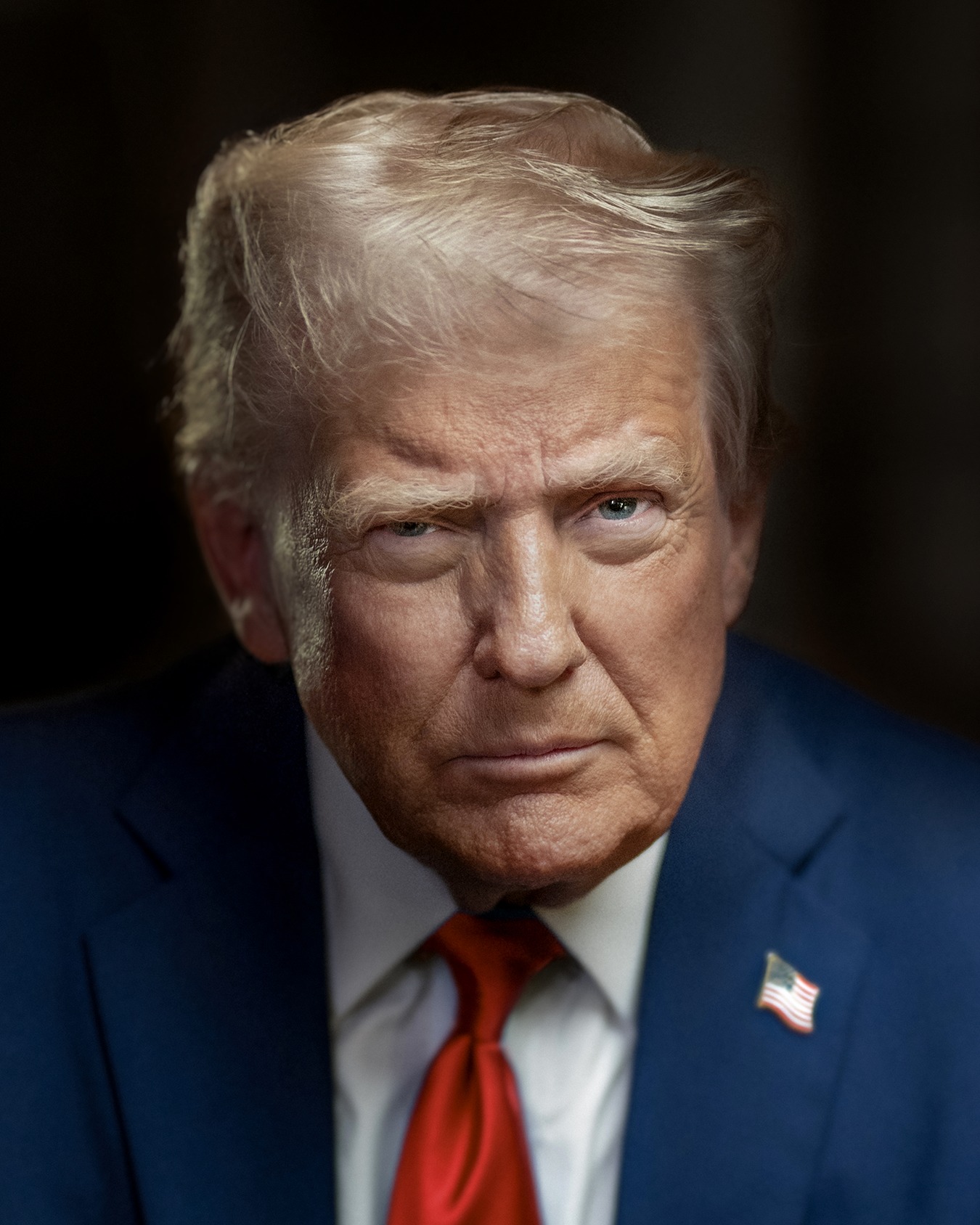
Ground beef costs about $6.89 a pound, and President Trump wants that price to come down. On August 21 he announced a deal. For 90 days, up to 300,000 metric tons of foreign beef could come in without the usual extra tariff, which is a tax on imports. He said he had a commitment that it would sell for 25 percent below current prices.
This isn't steak. The rule covers lean beef trimmings, the lean pieces that get mixed with American beef to make ground beef. The government says the country's cattle herd is the smallest it has been in 75 years, so there is less of that meat at home. Trump made the deal official on August 26, starting with a batch of 100,000 tons on September 1.
So where is the beef coming from? On September 4, surrounded by ranchers in the Oval Office, Trump answered. "It's coming from Argentina. It's coming from Brazil. It's coming from a couple of other places," he said. "We have our inspectors down. It's very clean. It's very good." That same day he signed two orders meant to win back ranchers, who say the cheaper imports undercut their business.
What's at Stake
Metric tons of foreign lean beef allowed in without the extra tariff, 100,000 tons a month through November 30.
Market intelligence
The read: Over five years, the S&P 500 is up 71.1%. Over one year, the S&P 500 is up 13.8%. Over the past month, the S&P 500 is down. The S&P 500 is down 0.5% today.
Agriculture Department, European Union and ArreBeef don't trade on a stock market.
Prices move for many reasons. This shows where they stand, not what caused it.
Prices: Yahoo Finance.
By the Numbers
How We Got Here
- China stops one Argentine plant
China stops buying from an ArreBeef plant after reporting a banned antibiotic in a shipment of its beef.
- Europe votes on Brazil
Experts from the European Union's countries vote to drop Brazil from their list of approved meat suppliers, starting September 3.
- A recall
The Agriculture Department announces a recall of Argentine beef that reached stores without its import inspection.
- Trump announces a deal
He says up to 300,000 metric tons of foreign beef can come in without the extra tariff, at 25 percent below current prices.
- The deal becomes official
Trump signs the proclamation that opens three batches of 100,000 tons.
- Trump names Brazil
In the Oval Office, Trump says some of the beef is coming from Argentina and Brazil, the day after Europe's ban on Brazilian meat began.
The System Underneath
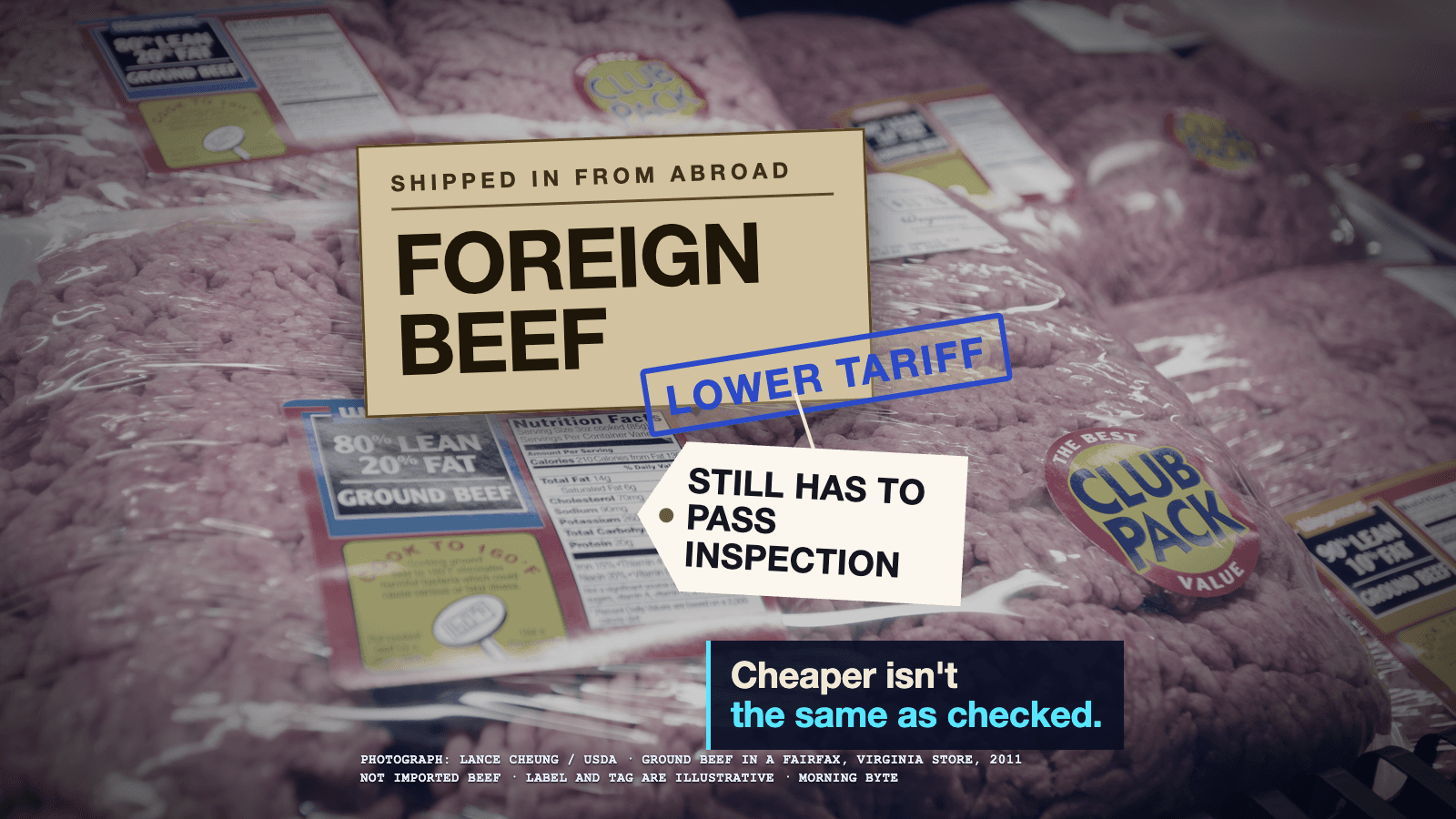
Meat plants abroad ship lean beef through the tariff cut. Then it has to pass the port inspection before it's mixed into ground beef at the store.
The People
- Meat plants abroadPlants in countries allowed to ship beef to America pack lean trimmings. Trump says some of it comes from Argentina and Brazil.
- they ship lean beef throughThe tariff cutUp to 300,000 metric tons can come in without the extra tariff, 100,000 tons a month through November 30.
- then it has to passThe port inspectionInspectors check the paperwork, condition and labels, and test some shipments. Beef that fails can't be sold here.
- before it's mixed intoGround beef at the storeThe trimmings are mixed with American beef to make ground beef, which costs about $6.89 a pound.
The tariff cut lowers what the beef costs to bring in. The inspection decides whether it gets in at all.
Why it matters
Europe had stopped buying Brazilian meat the day before. In May, experts from the European Union's member countries voted to take Brazil off their list of approved meat suppliers, starting September 3. The reason is medicine. Europe bans giving farm animals antibiotics just to make them grow faster, and Brazil couldn't guarantee its animals were raised that way. That doesn't necessarily mean the meat is contaminated.
Argentina has a different story. In March, Chinese customs officials reported finding a banned antibiotic in a shipment of beef from an ArreBeef plant, and China stopped buying from that plant. ArreBeef's owner says the test was wrong. He says just one box in that container tested positive, and the other 999 tested clean. From March to June, he says, extra sales to the United States filled much of the gap China left. Nothing we found shows that shipment came here.
So is the new beef unsafe? The tariff can't answer that, because a tariff only changes what the beef costs to bring in. Safety is a separate check. After imported beef arrives, Agriculture Department inspectors check its paperwork, its condition and its labels, and they test some of it in a lab. Plants with good records get checked less often. Beef that fails is stamped "U.S. Refused Entry" and can't be sold here.
That check can be skipped. On August 7, the Agriculture Department announced a recall of about 29,628 pounds of Argentine beef that went to stores in Florida and Texas without that inspection. The beef was made in May, months before the new deal. Inspectors caught the problem during routine work, and there have been no confirmed reports of anyone getting sick.
Who's Accountable
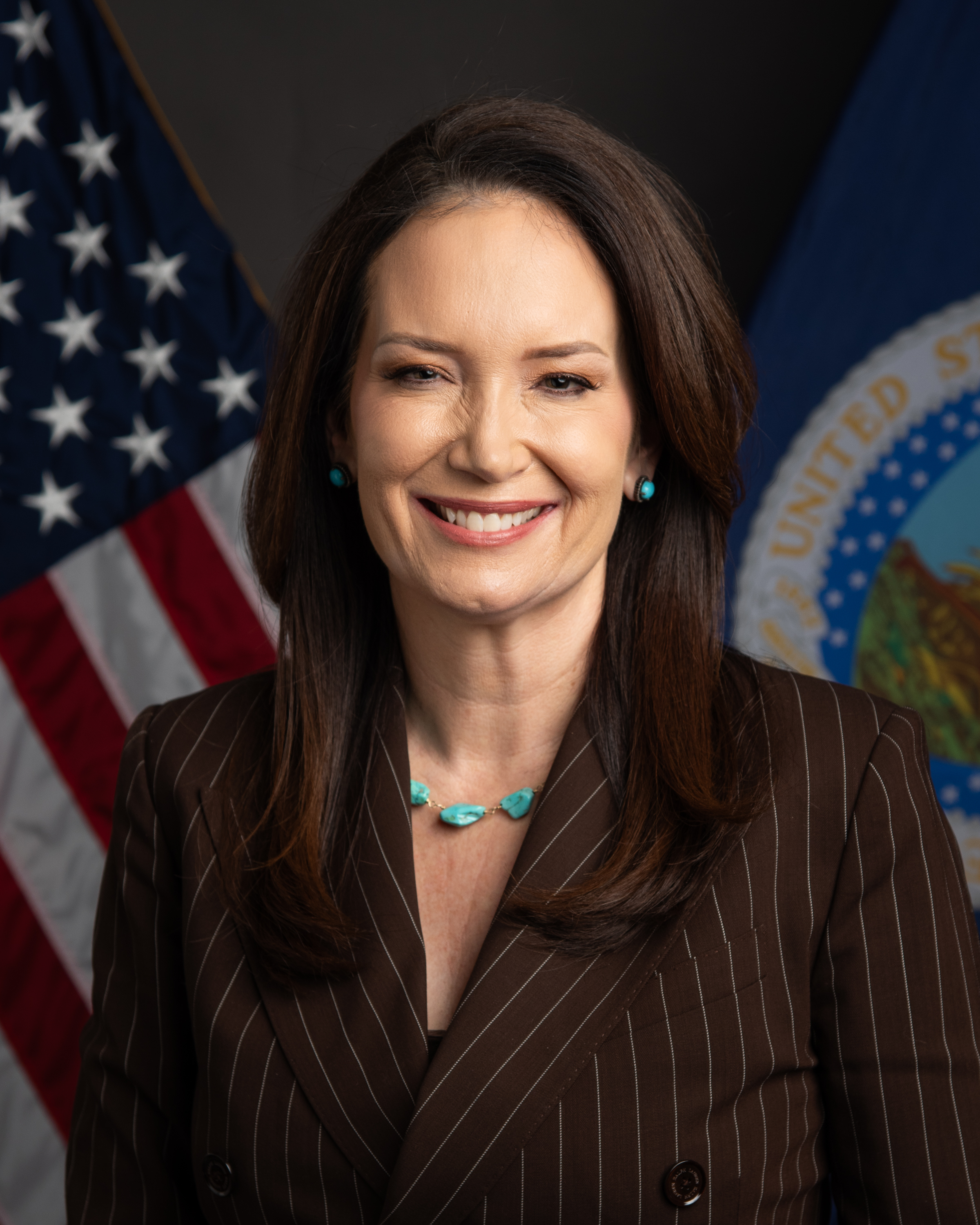
Checking, with the president's top trade official, whether the new beef really sells 25 percent below market, and running the inspections that decide which imported beef gets in.
Photograph: U.S. Department of AgricultureWhat to watch
The 25 percent discount is a promise, not a rule stores must follow. The Agriculture Secretary and the president's top trade official have to check whether the imported trimmings really sell 25 percent below market. If they don't, Trump can cancel the rest of the opening. The second batch of 100,000 tons opens October 1, and the last one closes by November 30.
Here's what reaches past beef. When a government cuts a tariff to make food cheaper, it changes what the food costs to bring in. It doesn't change whether the food is safe. That depends on the inspection at the door, and on every shipment actually going through it. So when you hear "cheaper imports," ask two questions: who gets the savings, and who checks what comes through?
Reader comments
Not signed in yet — hit Post and we'll finish it together