
What changed
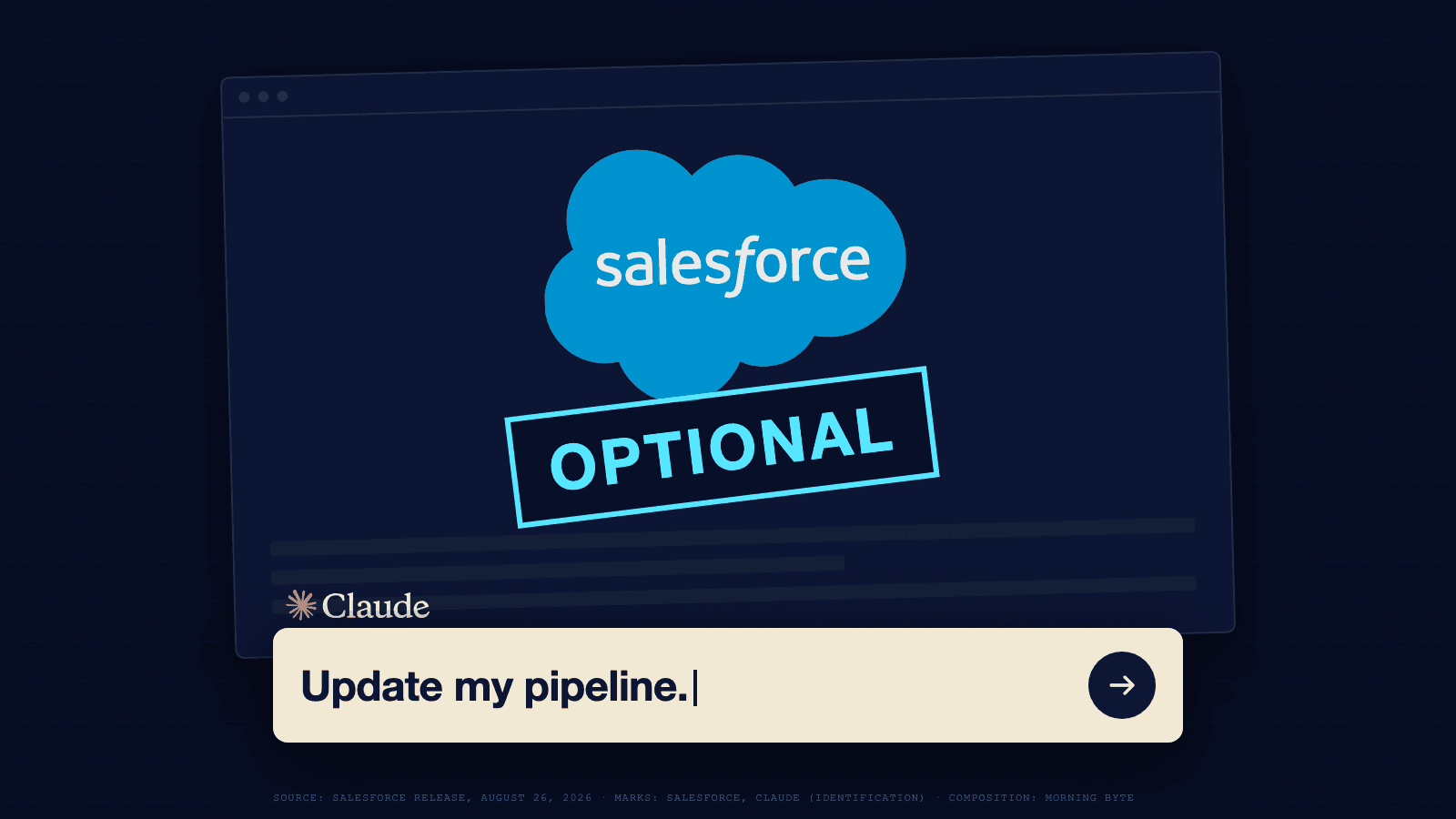
Salesforce sells the software that companies keep their customer records in, the kind of system the trade calls a CRM. On August 26, 2026, Salesforce and Anthropic announced a partnership in a release, and it is stranger than a normal launch because a software company is promising you may not need its screens. They called it Claudeforce. It lets a salesperson skip the Salesforce screens and type what they want to Claude instead.
The first product out of that partnership is called Salesforce in Claude. It is an add-on that runs inside Claude, and it arrives with thirty-seven ready-made sales tasks. Preparing for a meeting is one. Judging whether a deal is healthy is another. Reviewing the list of deals a seller is working is a third. Sellers can look up customer information, change records, and act on them without opening Salesforce, MarTech reports.
The permissions are the part worth slowing down for. An administrator links the two systems once, and logins stay managed in one place, according to the release. MarTech reports that the link inherits whatever each seller is already allowed to do. If a person cannot see or change a record in Salesforce, Claude cannot either. Every action still runs back through Salesforce, so the company's own rules still apply.
MarTech reports that Salesforce laid the groundwork in March, because a system called Headless 360 was already giving outside software a direct line to its data rather than the screens. Claudeforce packages that plumbing for ordinary business users rather than developers. The trade runs the other way too. Claude becomes the AI built into Slack, the workplace chat tool Salesforce owns. It also runs several Salesforce tools that do tasks on their own.
Ready-made sales tasks that ship inside Claude at launch, from meeting prep to reviewing a seller's deals. Pilot customers have them now; a public test is expected in September.
- March 2026The groundwork
Headless 360 gave outside software a direct line to Salesforce data, skipping the traditional screens, per MarTech.
- August 26The announcement
Claudeforce launches with Salesforce in Claude: 37 ready-made sales tasks, available to select pilot customers.
- SeptemberThe public test
Salesforce says it expects a public test stage in September; the first point an outside team can judge it.
- Late 2026More skills
More ready-made tasks begin launching, per the release; marketing, service, and commerce features remain a promise.
Salesforce and Anthropic made their deal bigger. At the pilot companies, salespeople can now do their Salesforce work by talking to Claude, and Salesforce's rules still decide what Claude is allowed to do. Claude also becomes the AI built into Slack. If your job lives in customer records, this lands on your desk.
- Claudeforcethe two companies' bigger deal, announced August 26
- launches withSalesforce in Claude37 ready-made sales tasks; sellers look things up, change records, and get work done without opening Salesforceand also puts Claude insideSlack and Salesforce's own toolsClaude becomes the AI built into Slack and runs several Salesforce tools that do tasks on their own
- which always answers toThe permission pathClaude can only see and change what that seller already could, and every action still goes through Salesforce's rules
- which is why it lands onYour workday in the recordsyou ask instead of click; checking the AI's work and keeping the records clean become the skills that matter
It ends with you: the screens become optional, but the permissions, rules, and records underneath still decide what the AI can do. Clean records decide how well it does it.
Why it matters
Follow what each company gets here. Salesforce keeps the part that cannot be skipped: the customer records, the permissions, and the rules that decide what an AI is allowed to do. Its applications president, Patrick Stokes, put it plainly to VentureBeat. The value of Salesforce is not the UI, he said, it is the data and the metadata. In plain words: not the screens people click, but the records themselves and the descriptions of how they fit together.
Anthropic gets reach. Claude becomes the AI built into Slack and reaches several Salesforce tools that do tasks on their own, per the release. The two companies are also each other's customers, so each side's praise for the other doubles as a sales reference. No law or government rule is driving this. It is a business decision by two companies, and the rules governing what the AI can do are Salesforce's own permissions and business rules.
If your day runs through one of these systems, the practical read has three moves. First, the skill that fades is knowing where the buttons are. The skill that gains value is directing the work: asking for the right thing, then checking what the AI actually did before it counts as done.
Second, tidy records stop being housekeeping. An AI answering from your deals is only as good as what somebody wrote down. That suggests clean data becomes personal leverage, not just a manager's request. Third, if your employer joins the pilot or the public test, treat it as a chance to be the person who can work both ways. The screens become optional rather than gone; optional is MarTech's own word for them.
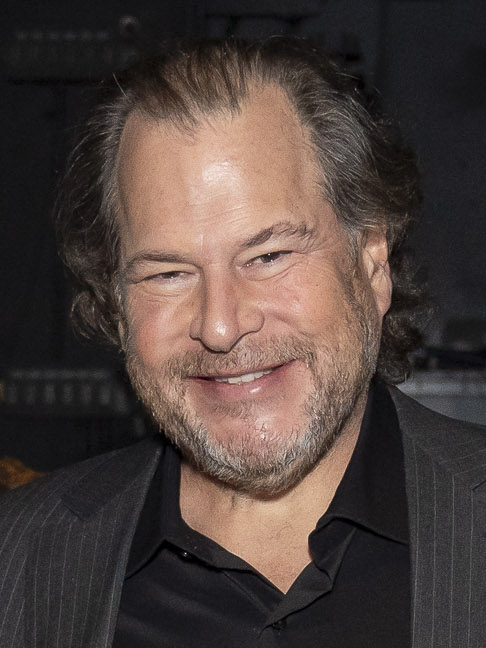
The claim this launch is graded against: he told CNBC the SaaSpocalypse narrative has been nonsense because AI models depend on customer-record systems. The September test, the unpublished pricing, and the promised features test it in public.
Photograph: U.S. Department of Homeland Security, public domainWhat to watch
The near test has a date on it. Salesforce says it expects an open beta in September, meaning a public test stage, past the invited pilot customers. That turns a private pilot into something a team can judge for itself. The price is deliberately unsettled. The release publishes no prices and says pricing is subject to change. How much an employer would pay is not yet known.
The scope is still a promise, too. Marketing, service, and commerce features are expected over the next few months, according to MarTech. More ready-made tasks begin launching in late 2026, per the release, which means the launch a buyer can touch today is narrower than the product being described. One demonstration deserves its own caveat. Salesforce showed Claude building a custom dashboard on the spot, then stressed that the demonstration is not a feature anyone can buy, MarTech reports.
Benioff has handed the world a claim to grade him on. He told CNBC that the SaaSpocalypse narrative has been nonsense. That is the prediction that AI kills business software. His reason: AI models depend on customer-data systems rather than replace them. If the public test lands in September and the promised features ship with real prices, that argument will get its first open examination. If the dates slip and the tool stays sales-only, the flip stays a demo.
Reader comments
Not signed in yet — hit Post and we'll finish it together