
What changed
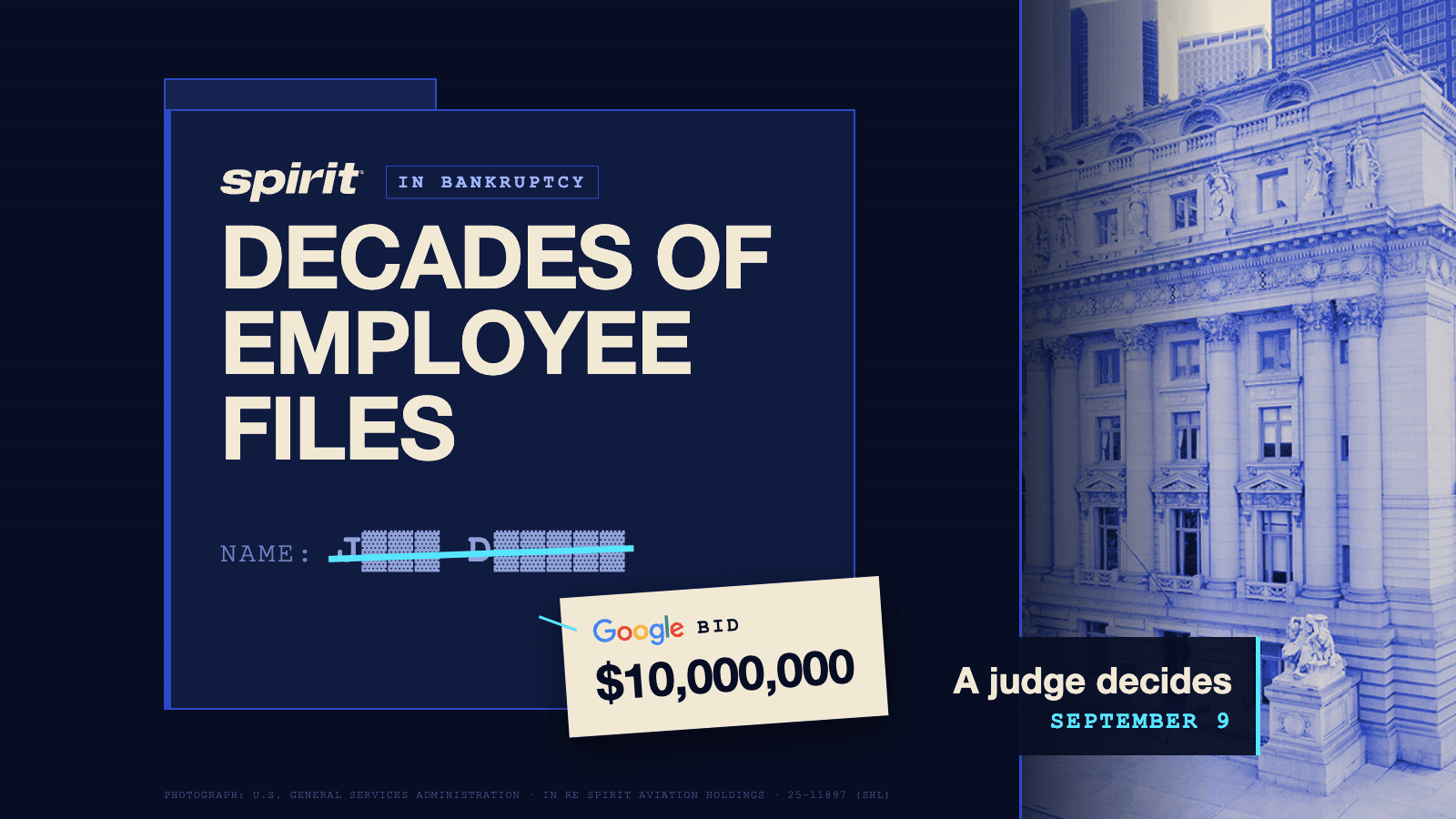
Spirit Airlines is in bankruptcy, and what remains of the company is being sold in pieces. Spirit's mid-August auction notice shows Google as the winning bidder for one of those pieces: the airline's internal data archive. Google offered $10 million in August 2026, versus a $7.5 million backup offer from Mercor, which leaves the estate a payment that still needs the judge's approval. The archive is not customer data. It holds the working life of the airline: payroll, timekeeping, training, travel, and recruiting files, plus about one hundred million emails and half a billion Teams items. Four days after the auction, the union representing Spirit's flight attendants filed a limited objection. It does not try to stop the sale. It asks the judge to pull flight-attendant records out of the package, or screen them separately, before anything transfers.
What Google agreed to pay at auction for Spirit's internal archive of workplace records. The judge has not approved the sale.
- June 22Bidding procedures approved
The court approves the process for selling Spirit's assets, the deidentified data among them.
- August 14Google wins the auction
Google bids $10 million for the deidentified data; Mercor is the $7.5 million backup.
- August 18The union objects
The flight attendants file a limited objection. The same day, the hearing is moved off August 19.
- September 9The sale hearing
Judge Lane decides whether the sale proceeds, and on what conditions.
Spirit's estate is selling the workplace archive, Google is buying it with names removed but links preserved, the union objects that confidentiality is not the same as anonymity, and the judge decides whether worker records get their own screen.
- Spirit's bankruptcy estatein Chapter 11, turning its remaining assets into cash
- is sellingThe workplace archivedecades of payroll, timekeeping, training, travel, and communications
- toGooglethe $10 million winning bidderwhich drewThe union's objectionnames off is not the same as confidential
- which would receive the data withNames removed, links preservedthe contract requires deidentification while keeping records joined across systems
- which is why the fight is aboutYour own work historywhat the systems you type into every day remember about you
The lit path ends on the reader: when an employer fails, the email, chat, and scheduling systems its people typed into can become an asset someone else buys.

Whether the sale of Spirit's workplace archive is approved, and on what conditions, at the September 9 hearing.
Photograph: U.S. General Services AdministrationWhy it matters
The deal's privacy screen was built for customers, not staff. The contract excludes anything that identifies a consumer, then requires the remaining records to keep their links to each other. A file can travel from training to payroll to a Teams thread with the name gone. Nearly every consumer category is excluded, according to the union, while nearly every employee category is included. Google's promises are about identity, not confidentiality: it commits to keep the data deidentified and not to intentionally reconnect it to a person or household. That suggests the real exposure is not identity theft but memory: linked records that can still describe a small crew base, a discipline case, or a pay dispute. Flight attendants get no third-party beneficiary rights under the contract, so they cannot enforce the buyer's promises themselves. If your own job runs through email, chat, and scheduling software, treat those systems as a record that can outlive your employer. Where policy allows a personal channel, keep grievances, health details, and money matters out of work chat. Keep your own copies of pay and training records, because the workers in this case have no practical way to monitor what happens to theirs. And if your employer ever fails, watch who buys the files, because this contract has no employee-confidentiality screen unless the judge orders one.
What to watch
The hearing is the test. The sale hearing moved to September 9, which leaves the union three extra weeks, versus the original August 19 date, to negotiate protections. If the judge conditions the sale, the order could exclude flight-attendant records, require an employee-confidentiality review, ban profiling of individuals or small groups, or bind anyone Google later shares the data with. Whether the court will require any of that is not yet known, and the union says it is still trying to resolve the issues by agreement before the hearing. The transfer is the point of no return: once the records are delivered, no later order can meaningfully recall them. Watch Judge Lane's final sale order when it comes. If employee records get their own screen, bankruptcy sales may start treating worker files as different from customer lists. If the order approves the sale unchanged, the price of a workplace archive was set at $10 million in 2026, versus silence about what it costs the people inside it.
Reader comments
Not signed in yet — hit Post and we'll finish it together